Scope Magazine
The Other Black GirlScope Magazine is the Portland, Oregon, newsroom where the epilogue’s narrator prepares an article about Other Black Girls and the risks of deciding whom to trust. The magazine’s editorial routine gives her a path toward publication, but the article’s imagined reach also reveals how closely she ties exposing a workplace threat to the hope of finally being recognized for her labor.
Setting and Editorial Workflow
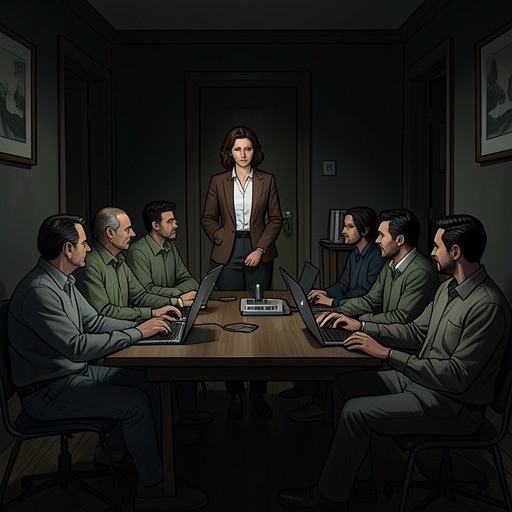
In January 2019, the epilogue places Scope Magazine in Portland, Oregon. The narrator has been working on her article for several days and, after saving it, believes the full piece is ready for fresh eyes. Her next steps depend on an editorial chain: she can send it to Gwen, wait for edits, revise it again, and have Ralph in legal review its evidence. She imagines the article going online at five the following morning, timed for East Coast commuters. These are anticipated steps, not a publication the passage confirms has occurred.
The newsroom’s schedule sits beside less consequential routine work. Before sending the exposé, the narrator considers taking a short reading break and then researching her next article, while imagining that Gwen might assign the basic coffee-bean story to another new employee. The contrast places an ambitious investigation within the ordinary flow of assignments rather than outside it.
The Other Black Girls Article
The article frames its stakes around people who arrive first, leave last, perform domestic or emotional labor, and have little beyond their dignity to protect. Its closing appeal urges Black women to remain focused, join together, and continue resisting. The narrator describes the work as an effort to put herself into every sentence, making the article not just a report but a piece into which she has invested her own perspective.
The article concerns Other Black Girls, or OBGs, and the difficulty of knowing whom to trust in a workplace. The narrator anticipates that its disclosure could unsettle Black people’s trust in one another across workplaces for a time, though she imagines that matters would eventually right themselves. This forecast gives the article a dual horizon: exposure may cause immediate uncertainty, yet bringing the subject into public view could also force workplaces to reckon with it.
Ambition and Anticipated Reach
As she attaches the file to an email, the narrator imagines a response far beyond the newsroom. She expects Black Twitter to react, pictures the NAACP holding a press conference and CNN giving the story a prime-time special, and thinks Jesse Watson might be drawn out of his hiatus. She further imagines workplaces across America going into crisis mode. None of these responses is shown as having happened; they belong to her projection of what the article might set in motion.
That vision of public consequence is intertwined with a hope for personal advancement. The narrator anticipates no longer being treated as a newcomer or having to prove herself, and imagines becoming a household name with invitations to television shows and podcasts. The thought breaks off at the realization of what such recognition would mean to her. Scope is therefore presented both as the place through which the story might reach the public and as the professional setting in which the narrator hopes her work will change her standing.